AI can compress the slowest parts of a brand audit into minutes, but it can't replace the judgment that makes one useful.
A brand audit reviews how a brand looks, sounds, and behaves everywhere it shows up. That's always meant hours of manual screenshotting, spreadsheet-building, and squinting at old guidelines. AI now handles much of that grunt work, freeing strategists to focus on what the findings actually mean.
What a Brand Audit Actually Needs to Cover
A thorough audit examines three layers: verbal (messaging, tone, naming), visual (logo, color, typography, imagery), and experiential (how the brand behaves across web, social, packaging, and service). Before touching any AI tool, define the question driving the audit: repositioning, a pre-rebrand baseline, or a post-merger consistency check. AI speeds up data collection. It doesn't frame the problem.
Stage 1: Collecting the Visual Evidence
Site crawlers and screenshot tools paired with AI image-tagging can sort hundreds of touchpoints by color, imagery style, or layout. Multimodal models like GPT-4o, Gemini, and Claude can describe assets in structured terms for a first-pass catalog. Tools like Figma's AI search or Adobe Express help locate every instance of a logo or template fast.
Stage 2: Checking Guideline Consistency
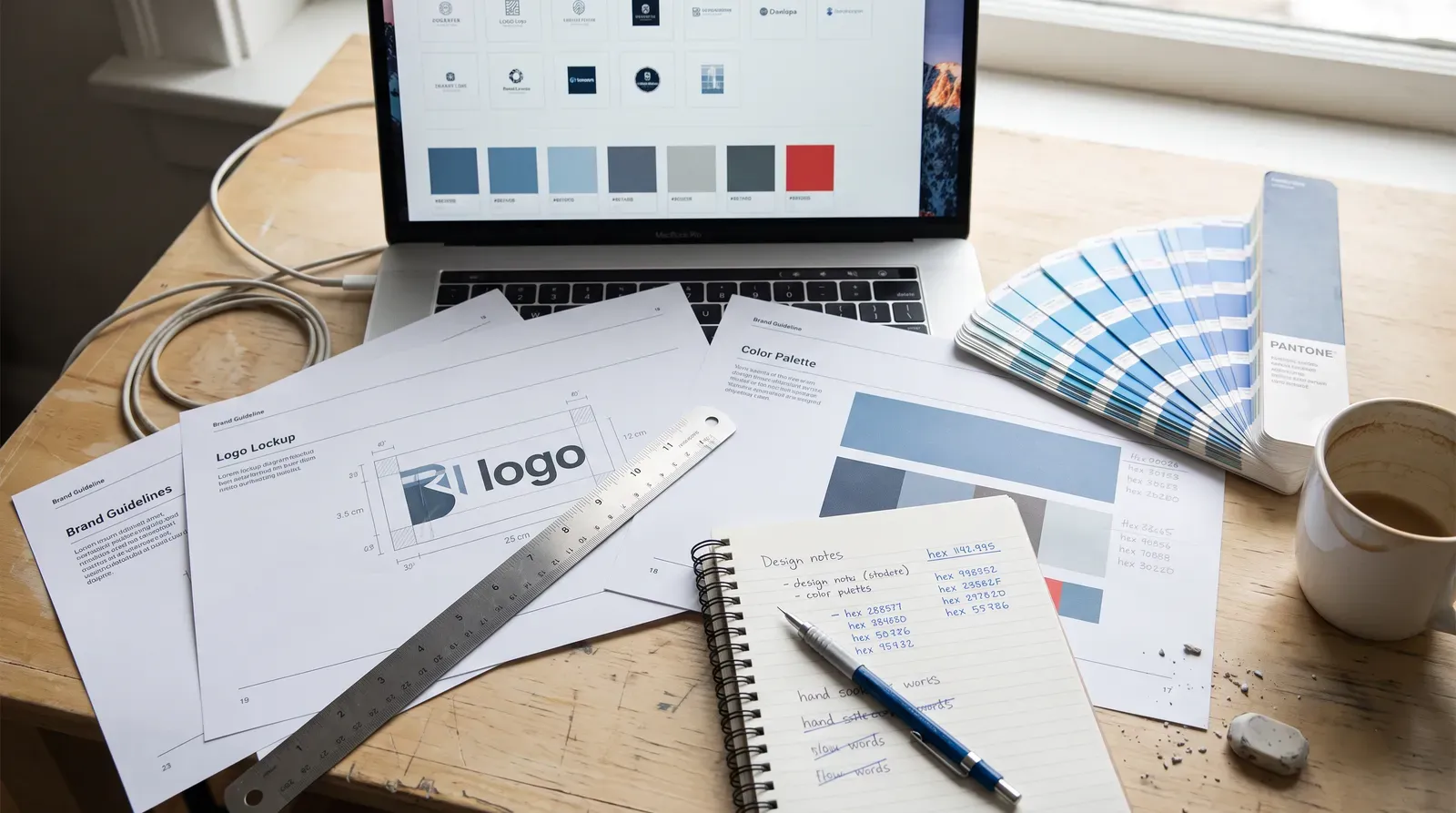
AI vision prompts can extract hex values and flag drift from documented palettes, but compressed screenshots get misread. Always spot-check extracted values against the source file. Structured prompting can compare a guidelines PDF against asset descriptions to build a first-pass gap list for a strategist to prioritize.
Stage 3: Analyzing Verbal Consistency
LLMs summarize tone and vocabulary across website copy and collateral efficiently. Use purpose-built tools like Hemingway Editor for readability rather than generic sentiment scores. Keep raw quotes alongside AI summaries: LLMs tend to smooth over real contradictions.
Stage 4: Competitive Scanning
Search-augmented tools like Perplexity speed up gathering competitor positioning and visual details. This carries the highest hallucination risk in the workflow, so verify every data point directly. Structure outputs as comparison tables, not prose, so errors are easier to spot.
Where a Human Still Matters
AI pattern-matches the data it's given; it can't judge whether choices resonate with a real audience. Treat every AI-assisted finding as a fast first pass, verified and interpreted by someone accountable for the final call.
Ready to turn audit findings into a sharper brand? Talk to Designally about your next identity review.