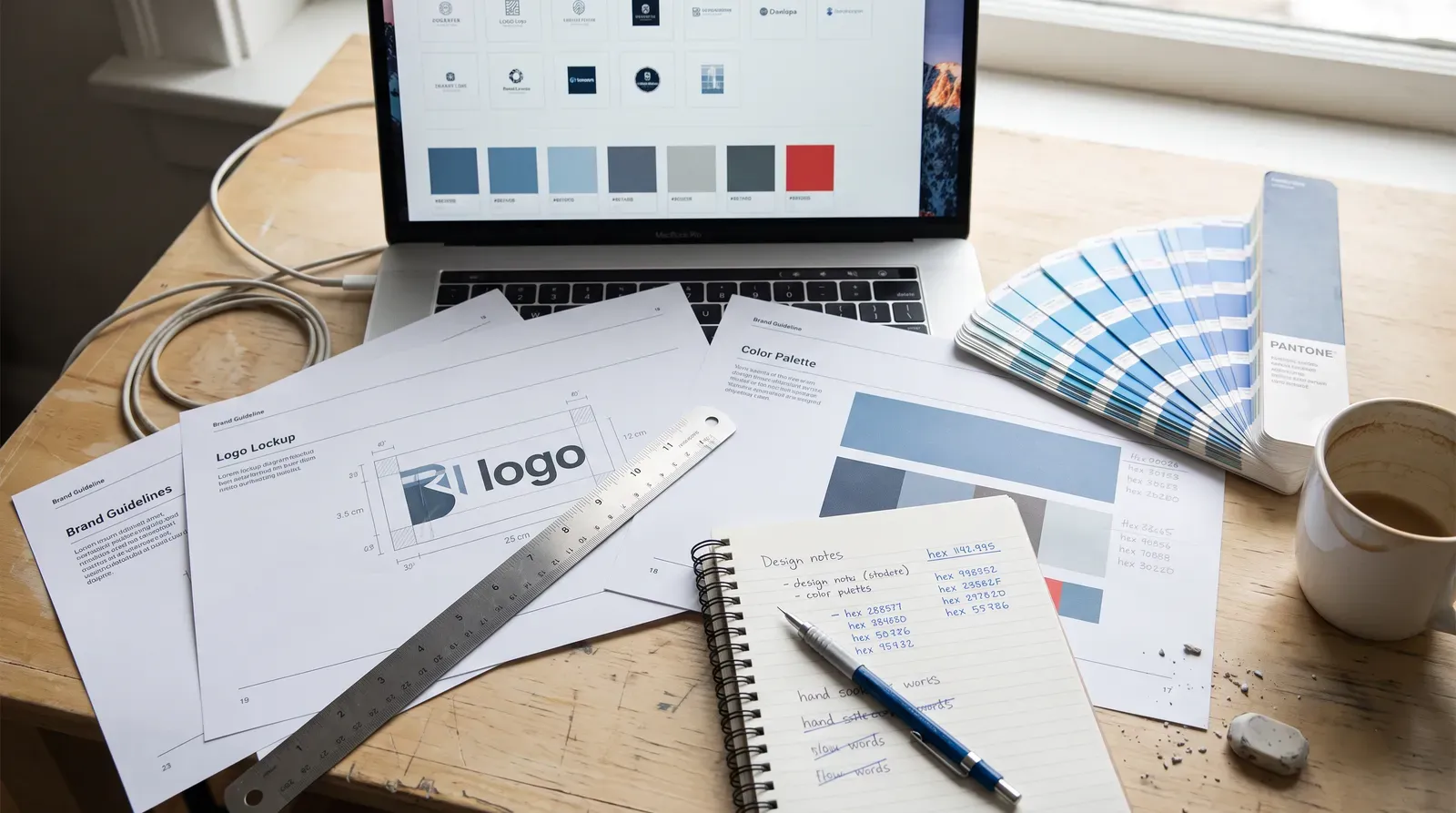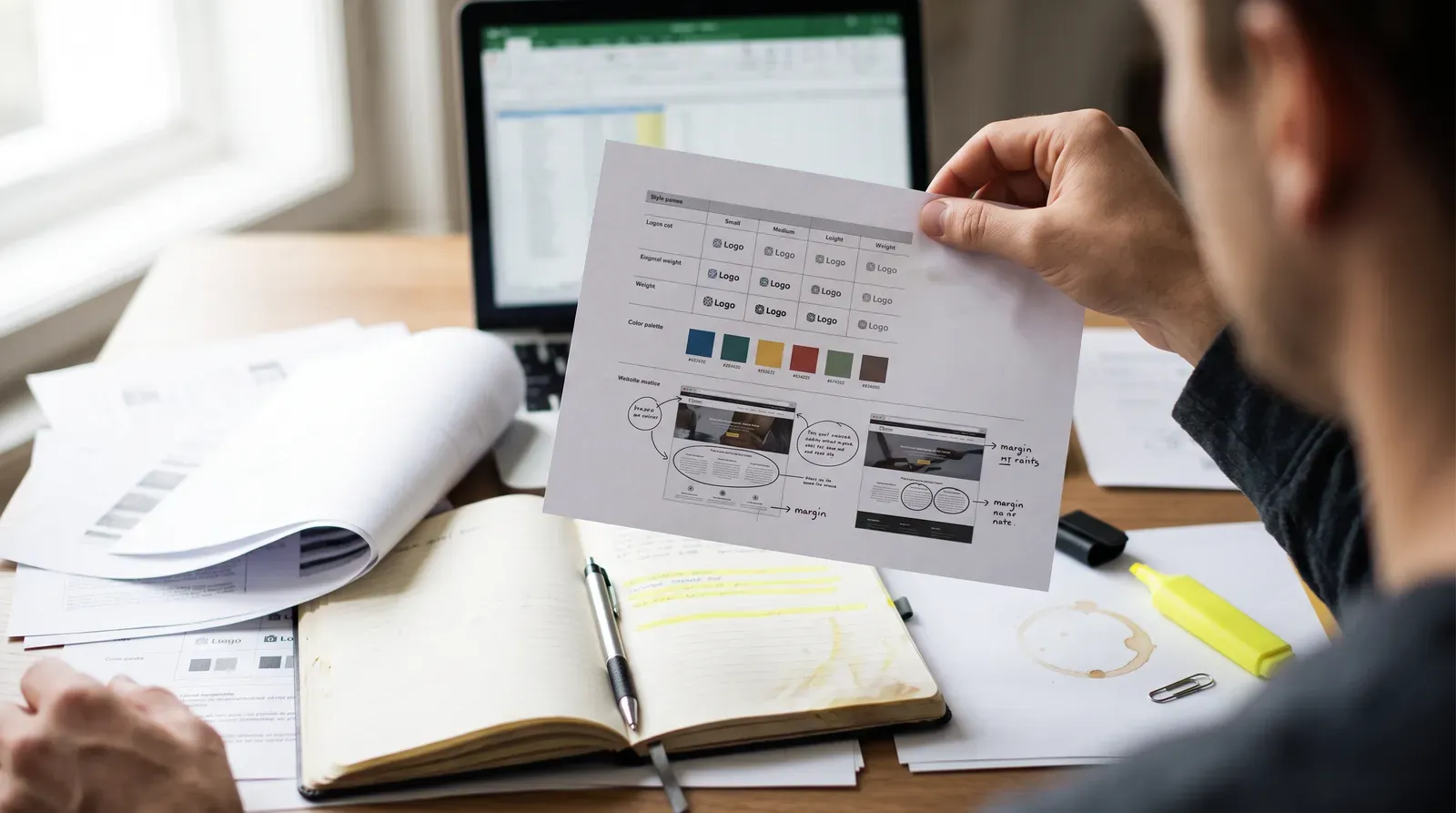
AI can now scrape a website, cluster competitor visuals, and summarize tone-of-voice patterns in minutes, but a brand audit is a diagnostic exercise, not a data-collection exercise. Here's where AI genuinely earns its place in the process, and where it still needs a strategist to finish the job.
What a brand audit actually involves, before AI enters the picture
A proper audit covers verbal identity (tone, messaging, naming), visual identity (logo, color, typography, imagery), and market position (competitor comparison, audience perception, consistency across touchpoints). The real output isn't a checklist. It's a set of judgment calls: what's working, what's quietly hurting the business, and what's just inconsistent but harmless. Some of that work is mechanical, collecting and organizing evidence. Some of it is interpretive, deciding what the evidence means. AI is strong at the first, weak at the second.
Where AI genuinely helps: collection and pattern-spotting
Tools like ChatGPT and Claude can summarize long brand documents, stakeholder transcripts, or scraped site copy into structured notes, surfacing repeated phrases or tone drift far faster than manual review. Image-clustering tools can flag where a color palette or type system has drifted across touchpoints, which is pattern-matching, not aesthetic judgment. Transcription tools like Otter.ai speed up interview processing so strategists can focus on the conversation itself, not note-taking.
Where AI-generated audits break down
Competitive positioning depends on knowing which competitors actually matter to a client's board or sales team, nuance no public-web summary can access. Tone assessment is contextual: a model can flag inconsistency, but deciding whether a brand should sound more authoritative or more approachable is a judgment tied to audience psychology. AI also can't know the internal politics or history behind past design decisions, and it doesn't reliably judge whether a logo still feels distinctive.
The workflow that keeps AI in its lane
Use AI for first-pass collection: organizing assets, indexing interview transcripts against recordings, and cross-referencing competitor sites, always treating outputs as drafts to verify against source material.
The judgment work that stays human
Deciding what a brand should stand for, spotting dated versus distinctive design, and delivering uncomfortable findings persuasively all require a trained strategist, not a generated report.
If your brand could use that kind of human-led audit, talk to Designally about where to start.