A tallboy can and a skull are easy to copy. The strategy underneath them is not.
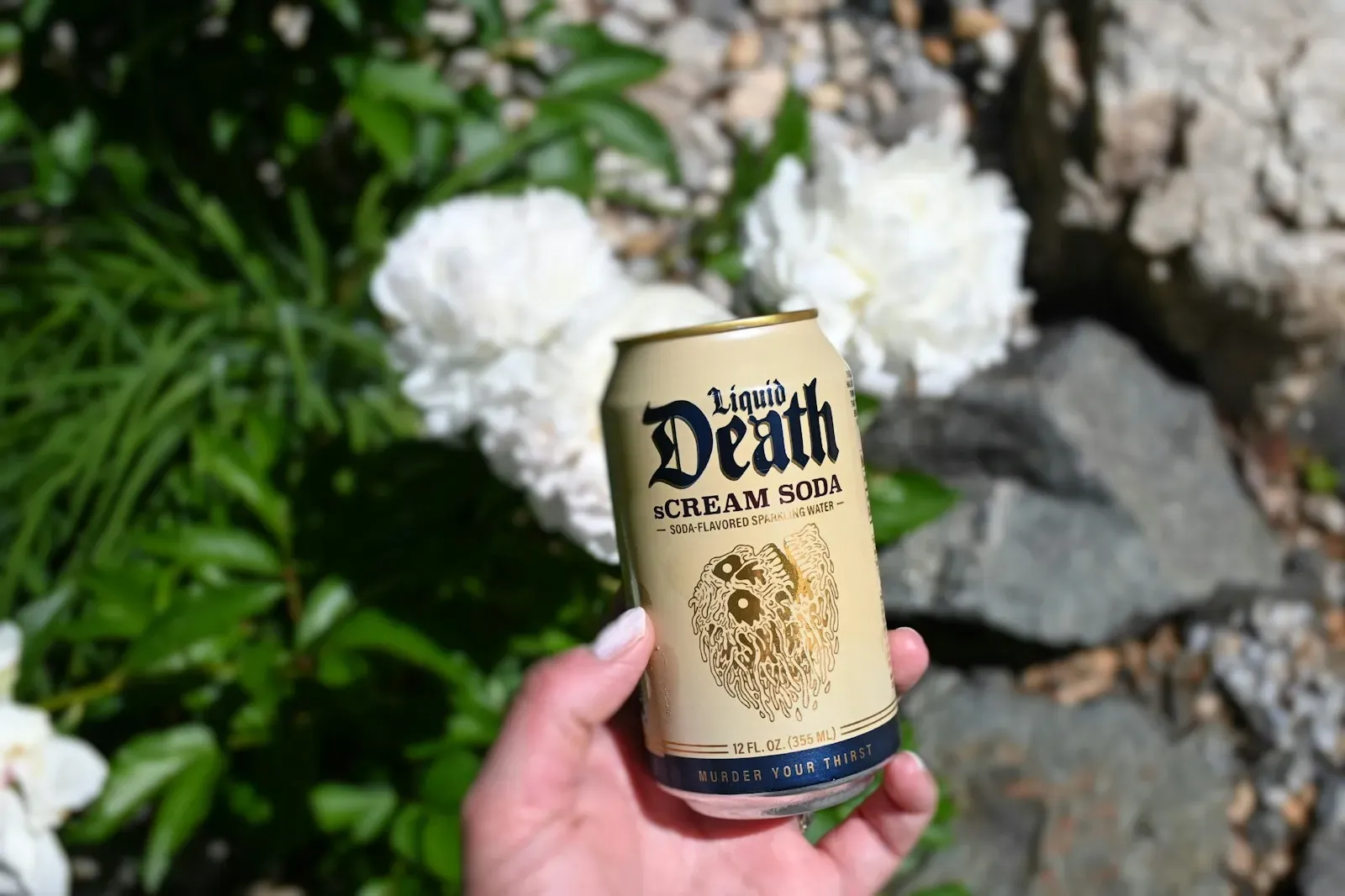
Liquid Death sells canned water in a category built on softness: blue labels, mountain peaks, purity cues. It dressed its cans like a metal band's merch table instead, and rivals have since launched their own dark cans and skull mascots without denting Liquid Death's cultural lead. Here's the strategic thinking that copycats keep missing.
The strategic bet: category codes as the enemy
Founder Mike Cessario built Liquid Death on a simple inversion: treat water like a beer or energy drink, not a wellness product. The tallboy can, borrowed from craft beer, replaces the plastic bottle that defines the water aisle. The tagline "murder your thirst" and the skull-and-bones mark flip the soft imagery every incumbent (Evian, Fiji, Smartwater) still relies on. This is a positioning call before it's a design one, and it comes with a functional argument too: aluminum recycles better than single-use plastic, giving the format real substance behind the joke.
A disciplined visual system, not just edgy art direction
Look closer and the "chaos" is tightly controlled: black cans, white and metallic linework, one consistent gothic-metal illustration style, a single mark used across every SKU. That constraint is what lets flavors, collaborations, and limited drops stay instantly recognizable on shelf. Copy lines like "Death to Plastic" aren't separate from the design, they're built with it. Borrow the can shape or the skull without the integrated voice, and you get a hollow reference, not a world.
Why direct copies read as derivative
When other beverage brands add dark colorways or edgy mascots, they usually retrofit them onto a softer, existing identity. That mismatch between look and voice is exactly what Liquid Death avoided by committing everything, naming, category framing, retail merchandising, to the bit. For design teams, the lesson is structural: a format or icon is reproducible fast. Positioning discipline held over time is not.
The takeaway for designers
Packaging here isn't decoration, it's the primary carrier of strategy. Trends can be copied overnight; systems have to be earned across every touchpoint. Study Liquid Death not for the skull, but for the discipline behind it.