Automation can gather the evidence, but only a trained eye can tell you what it means.
Brand audits, the systematic review of how a brand looks, sounds, and performs against competitors before a redesign, are now one of the easiest parts of a creative process to speed up with AI. But the tools promising to automate competitive teardown and visibility tracking are built for marketing ops, not for the interpretive judgment a strategist brings to a rebrand. Here's where AI genuinely helps, where it overreaches, and how to build a workflow that protects the thinking that still needs a human.
What AI is actually good at automating
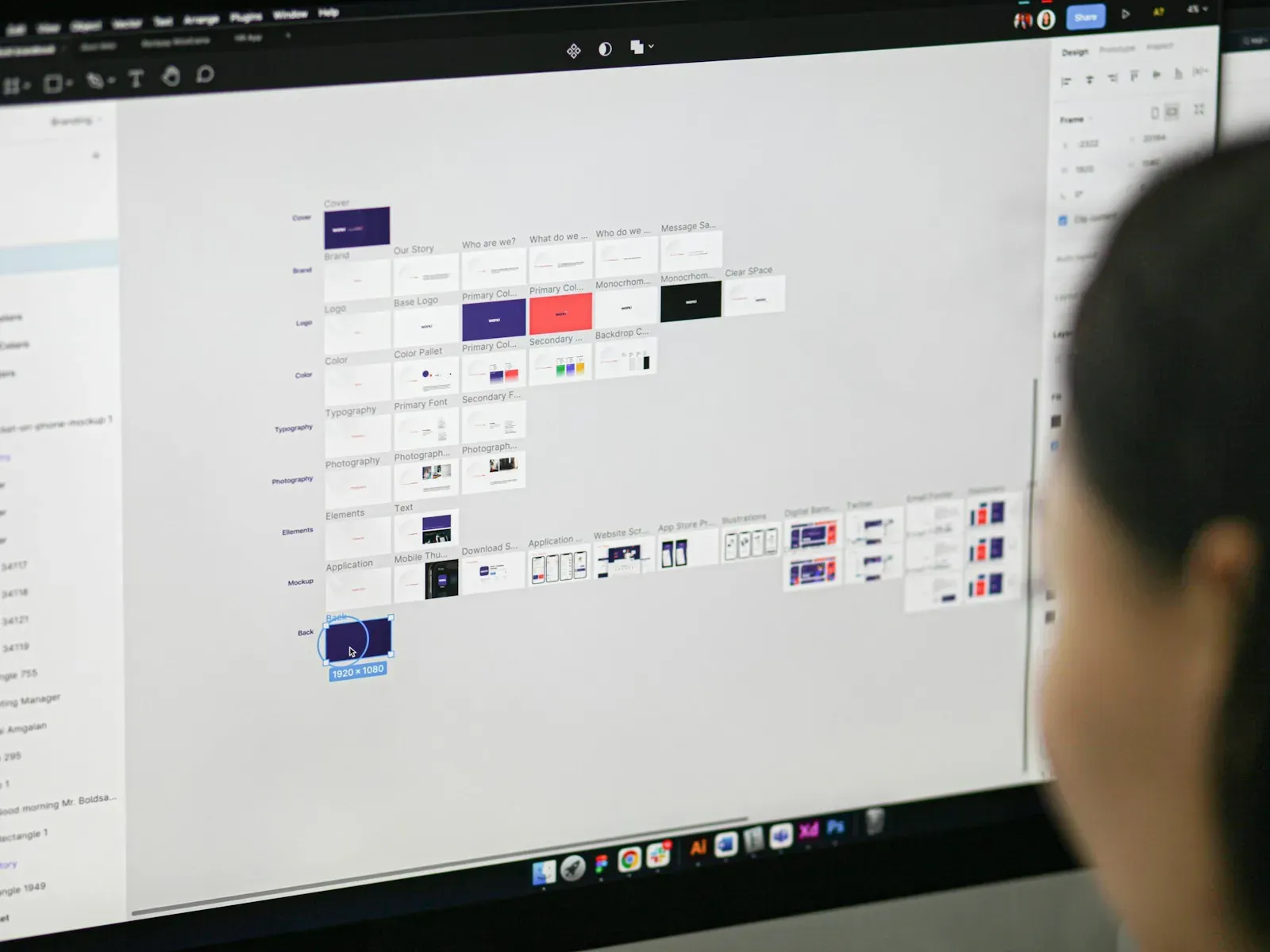
Tools like Crayon track competitor messaging and pricing changes across dozens of data types, turning raw shifts into SWOT-style summaries. Visualping catches pixel-level site updates and feeds screenshots directly into Figma for UI benchmarking. Similarweb adds traffic and market-share context a designer would otherwise request from a separate analytics team. These tools answer "what changed," which frees up time for interpretation, not a substitute for it.
Where AI brand-perception tools overreach
A newer wave of tools measures how brands appear inside AI chat answers, producing "citation scores" against competitors. That's a useful signal, but it's a proxy metric, not a verdict on design quality or customer perception. These tools measure algorithmic mention patterns, which can diverge sharply from how real customers actually feel.
The research evidence: strong assistant, weak interpreter
A 2025 Aalto University study, LLMCode, found LLMs handle rule-based coding well but struggle to replicate a designer's deeper interpretive read of qualitative data. A related paper on preserving designer agency warns that AI sensemaking tools can flatten contradictory feedback into sterile categories unless a human intervenes. The takeaway: let AI surface patterns fast, then slow down for interpretation.
A five-stage human-in-the-loop workflow
- Automated monitoring: keep competitive and visibility tracking running continuously.
- AI-assisted first pass: treat AI-drafted grids and clusters as drafts, not findings.
- Human interpretation: hunt for contradictions the model smoothed over.
- Qualitative grounding: add real interviews and customer conversations.
- Narrative synthesis: translate findings into positioning only a strategist can originate.
The call to action
Before adopting any AI audit tool, ask whether it's measuring real customer perception or just its own category. Use AI to make time for deeper analysis, not to quietly replace it.