Design pays off when it shapes decisions and removes friction, not when it only styles the output.
Most articles tell you design is good for business. Few explain how. Here is a clearer mental model, built on evidence that is honest about what it can and can't prove.
Design is problem-solving first
The Design Management Institute describes design as a method of problem solving, whether the result is a brochure, a signage system or a factory process. McKinsey frames it as a way of thinking driven by consumer needs, as Dezeen reported. Design drives a business through how it is practised, not how the finished work looks.
What McKinsey measured, and what it didn't
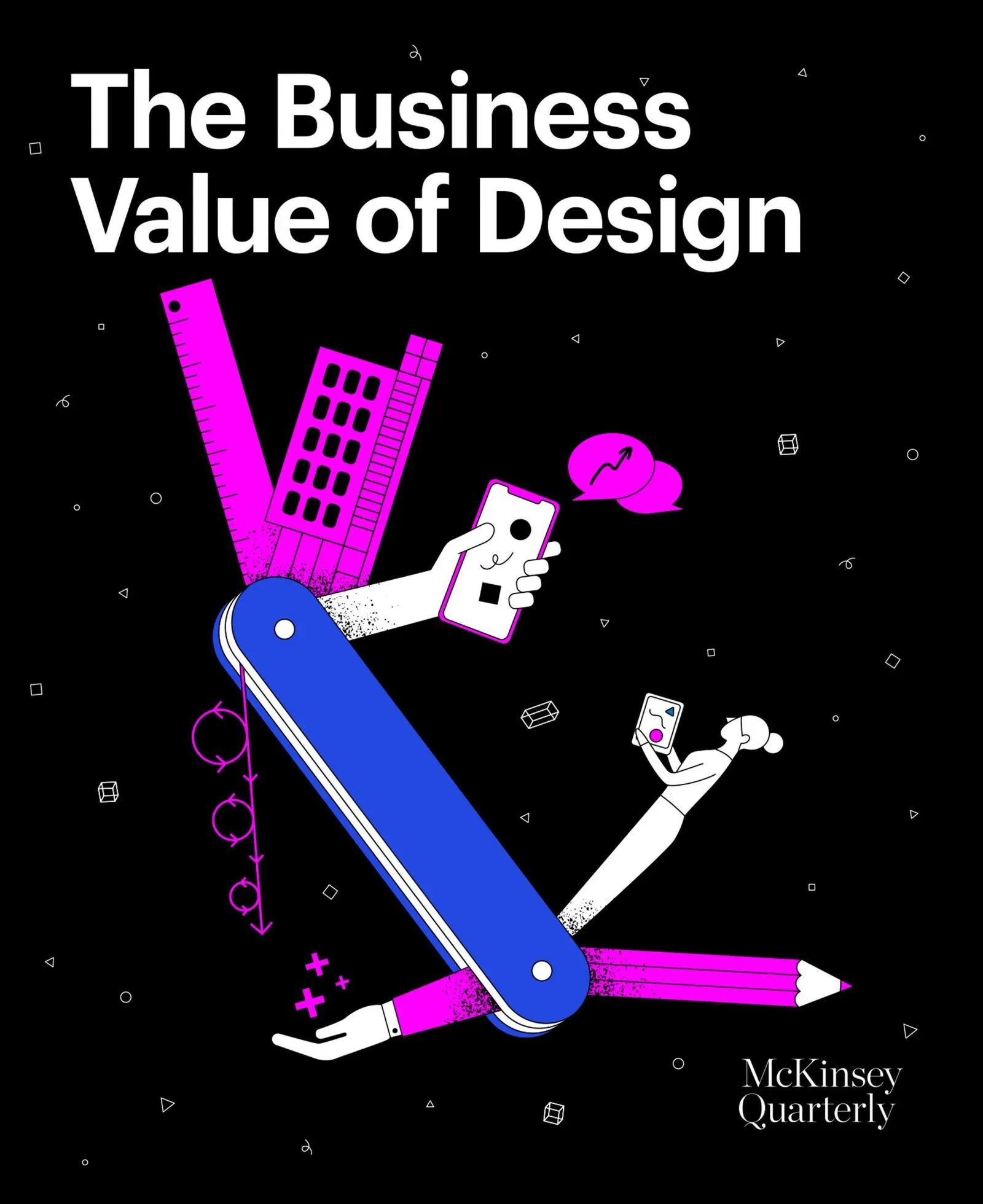
McKinsey's Business Value of Design study tracked 300 listed companies over five years. Top-quartile scorers on its Design Index posted 32 percentage points higher revenue growth. That is a correlation, not proof that design alone caused it.
Four mechanisms behind the gap
McKinsey grouped 12 design actions into four themes:
- More than a feeling: design is measured like revenue and cost.
- More than a department: design is everyone's job.
- More than a product: the whole customer experience is the design problem.
- More than a phase: teams keep testing with real users.
The survey found 66% of design leaders did not share prototypes with end users.
Airbnb: removing a barrier to trust
In 2009, Airbnb's revenue was flat. Joe Gebbia noticed that New York listings shared one flaw: poor photos. The founders rented a camera and reshot them. By Gebbia's account, weekly revenue roughly doubled. They solved a specific trust problem, not a styling one.
A practical mental model
- Name the barrier first: trust, clarity or friction.
- Get close to real users early and often.
- Decide how design performance will be measured.
- Cite the year and source of every statistic.
Before your next project starts, write down the one barrier your design must remove. Then build everything else around it.